
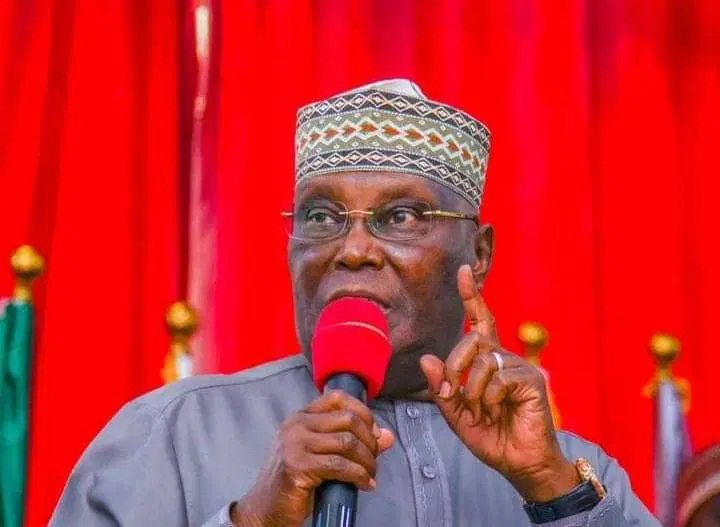
Former Vice President and African Democratic Congress (ADC) presidential candidate, Atiku Abubakar, has criticised the President Bola Tinubu administration’s handling of the economy, insisting that official statistics cannot conceal the hardship faced by Nigerians.
In a statement issued on Sunday by his Senior Special Assistant on Public Communication, Phrank Shaibu, Atiku dismissed recent remarks by Finance Minister Taiwo Oyedele defending the government’s economic reforms, including fuel subsidy removal, debt management and workers’ welfare initiatives.
He argued that the administration’s claim of using subsidy savings to reduce inherited liabilities contradicts available financial records, alleging that the Federal Government’s debt exposure to the Central Bank of Nigeria (CBN) has risen significantly since May 2023.
According to Atiku, the government merely restructured existing debt by converting Ways and Means advances into treasury bills and bonds while accumulating fresh obligations, describing the process as debt restructuring rather than repayment.
The former vice president also questioned claims that subsidy savings had improved workers’ welfare, saying the new minimum wage and the 40 per cent peculiar allowance had yet to be fully implemented, alongside other outstanding wage commitments.
On education funding, Atiku disputed the government’s assertion that subsidy savings finance the Nigerian Education Loan Fund (NELFUND), noting that the agency had previously disclosed receiving a ₦50 billion injection from funds recovered by the Economic and Financial Crimes Commission (EFCC).
He further blamed the administration’s policies for rising borrowing costs, arguing that higher interest rates have made credit more expensive for businesses while increasing the country’s debt servicing burden.
Atiku maintained that inflation, rising food prices, naira depreciation, business closures and growing poverty remain the realities confronting Nigerians despite government assurances that its reforms are yielding results.
The exchange adds to the continuing disagreement between the Tinubu administration and opposition figures over the impact of reforms introduced since May 2023, particularly the removal of fuel subsidy and the liberalisation of the foreign exchange market. While the Federal Government says the measures are necessary to stabilise the economy and attract investment, critics argue they have worsened the cost-of-living crisis.
