
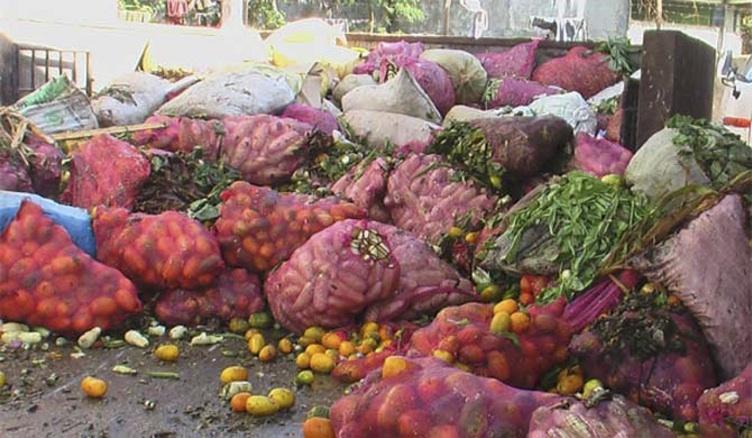
The European Union, Federal Government, and the United Nations Industrial Development Organisation have called for urgent measures to curb food waste in Nigeria, warning of its growing impact on food security and climate change.
At the International Zero Waste Day event in Abuja, EU Deputy Ambassador Zissimos Vergos revealed that Nigeria wastes about 38 million tonnes of food annually—the highest in Africa—describing it as a major loss of resources and a threat to environmental sustainability. Globally, nearly one billion tonnes of food was wasted in 2022, contributing significantly to greenhouse gas and methane emissions.
Vergos commended Nigeria’s steps towards a circular economy, including policy reforms and regulatory efforts, but urged stronger investment in rural infrastructure, improved storage and cold chains, and increased processing of agricultural produce. He also emphasised the need to embed zero-waste principles in school curricula to build long-term sustainability.
Minister of Environment Balarabe Lawal reiterated the government’s commitment, noting that new projects targeting food waste reduction in major markets have been included in the national budget. He stressed that tackling food waste is key to reducing pollution, conserving resources, and addressing food insecurity.
UNIDO representative Philbert Johnson also underscored the importance of efficient food systems, warning that waste undermines economic stability, environmental health, and community well-being.
Stakeholders agreed that stronger collaboration and sustained investment are critical to reducing food waste and advancing sustainable consumption across the country.
