
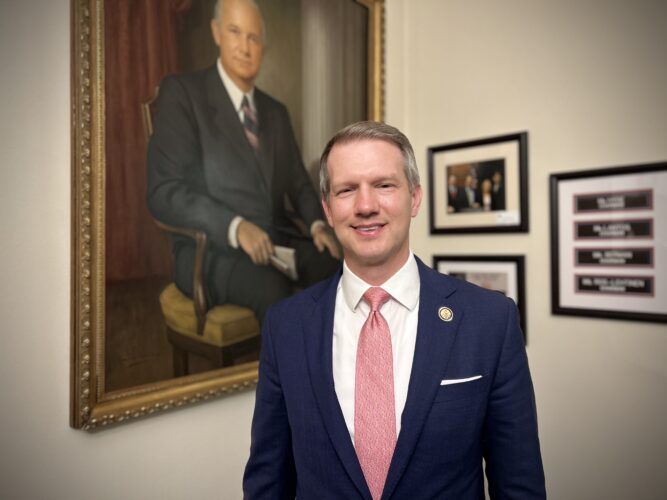
US Congressman Riley M. Moore has held a high-level meeting with Nigeria’s National Security Adviser, Nuhu Ribadu, and other senior officials to address growing concerns over religious violence and terrorism in Nigeria. The engagement, which took place in Washington, D.C., focused on the alleged persecution of Christians, the escalating activities of extremist groups, and the need for stronger security cooperation between both nations. Moore described the discussion as frank and productive, stressing that the United States expects decisive measures to protect vulnerable communities.
The Nigerian delegation included top government and security figures such as Minister of State for Foreign Affairs Bianca Ojukwu, Inspector General of Police Kayode Egbetokun, Attorney General Lateef Fagbemi, Chief of Defence Staff General Olufemi Oluyede, and Chief of Defence Intelligence Lt. Gen. EAP Undiendeye. According to Moore, the U.S. remains ready to support Nigeria in the fight against Boko Haram, ISWAP, and other militant groups—particularly in the Northeast and Middle Belt. He warned that religiously-motivated attacks must not be allowed to continue unchecked.
Moore also used the opportunity to criticize President Bola Tinubu’s earlier claims that Nigeria does not encourage religious persecution, insisting that the situation on the ground contradicts such assurances. He condemned the recent abduction of schoolgirls in Kebbi State and called for prayers for the victims and their families. He further urged the Nigerian government to embrace U.S. partnership, noting that both President Trump and Congress are committed to helping end violence targeting Christians.
The meeting occurred ahead of a major U.S. congressional hearing set to review Nigeria’s redesignation as a Country of Particular Concern. The session, chaired by Representative Chris Smith, will take testimony from senior U.S. State Department officials and Nigerian religious leaders. Lawmakers are expected to examine the state of religious freedom in Nigeria and consider actions such as targeted sanctions, humanitarian interventions, and enhanced security cooperation aimed at addressing ongoing violence.
