
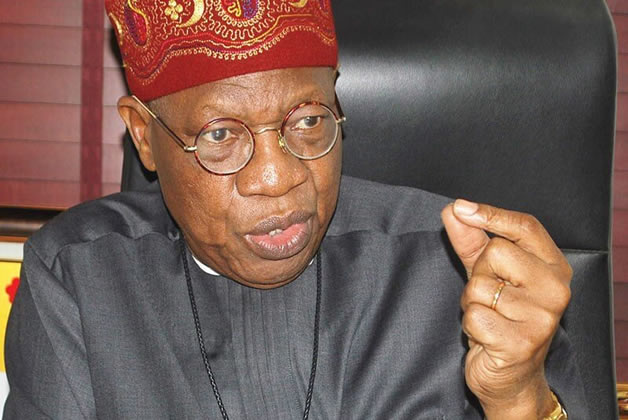
Former Minister of Information and Culture, Lai Mohammed, has again rejected claims that a “massacre” occurred at the Lekki Toll Gate during the 2020 EndSARS protests, describing the narrative as a product of misinformation amplified by social media.
Speaking on Wednesday during an interview on ARISE News while discussing his new book, Headlines and Soundbites: Media Moments That Defined an Administration, Mohammed said one of the toughest battles of his tenure was confronting what he called a flood of unverified reports during the protests.
“EndSARS was unfortunate, it was tragic, but the claim that there was a massacre at the tollgate is fake news,” he said.
Mohammed maintained that no family has, in five years, reported any missing person linked to the Lekki demonstration.
“If a man has a goat and the goat does not return home one night, he will go and look for it. Five years on, nobody has come forward to say their son or ward went to the tollgate and never returned,” he said.
He also criticised CNN’s coverage at the time, insisting its reports relied on “second-hand information” and lacked direct verification.
“Nobody said no one died during EndSARS. People died in Abuja, Lagos, Kano. What we said was that CNN was not at the tollgate and relied on second-hand thoughts and information,” he added.
According to Mohammed, the Buhari administration viewed unregulated social media as a national security risk due to its capacity to escalate misinformation. He also defended the 2021 suspension of Twitter, describing it as a difficult but necessary measure to curb harmful content.
The Lekki Toll Gate shooting on October 20, 2020, became one of the most contentious moments of the nationwide protests against police brutality. Protesters had gathered peacefully when security forces reportedly opened fire, triggering panic and international outrage.
Disparate official accounts and independent investigations over the years have further deepened debate about what transpired and the broader issues of state accountability, human rights and police reform.
